


Most churches run on email. It's already there, most volunteers have an address and nobody has to install anything. It works for a newsletter, a rota or anything that needs to be on record.
But a church conversation is not a newsletter. It's a youth team sorting out Friday night, a worship rota changing at short notice or a volunteer group where nobody is quite sure who's still on the list. Email carries all of that in the same inbox as everything else. There's no way to see who is in the conversation, or what has been said.
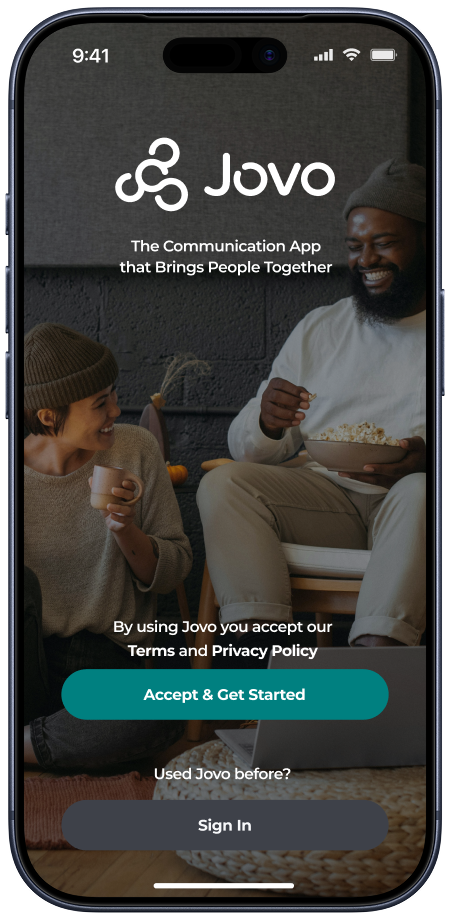
Jovo puts your church's conversations somewhere you can see them all together. A dedicated space for every ministry and the oversight your safeguarding lead needs when something sensitive comes up.
What Email Does Well
Email reaches almost everyone, and nobody has to sign up.
Most people already have an email address. There's nothing to download and nothing new to administer. It reaches the volunteer who won't install another app and the trustee who checks their inbox once a week. It also creates a record that sits outside any one system, which is exactly what you want for a formal letter, a safeguarding referral or anything that may need to be produced later.
For those things, email is the right tool. The questions start when a church uses it to run day-to-day conversation.
What a Church Still Has to Solve
An inbox holds messages, it doesn't hold a group. That's where a church starts to lose track. Four gaps matter most:
Nobody knows who is in the conversation.
Send a rota to the youth team and one leader forwards it to a helper who was never on the original list. Another replies only to you, so half the team misses the update. A third is still receiving emails despite leaving months ago. For a youth rota, that is a safeguarding problem, not an inconvenience. Safeguarding aside, email struggles with any group conversation once it grows.
Personal addresses get shared by default.
Put twenty volunteers in the To or CC line and every one of them can access the other nineteen email addresses. Most are personal accounts, some belong to young people, and once the message has been sent, there's no taking it back. BCC solves it, but only if whoever sends the email remembers every single time.
One-to-one contact stays open, with nobody watching.
An adult can email a young person directly and no one else will ever know. Most Church safeguarding guidance is consistent that this should never happen unseen. Email has no way to enforce that, so it comes down to everyone following the policy.
There is no record anyone can review.
Email keeps a copy for everyone who was on the thread, but this only works if the safeguarding lead is copied into every email. If a concern is raised, someone has to remember the exchange happened, find and forward the right messages, and anything deleted is simply gone. A safeguarding lead has no way to look back over a conversation they were never part of.
Jovo vs Email
The difference is clearest in the areas a church has to account for.
| Jovo | ||
|---|---|---|
| Built for | Formal messages and records | Church conversation |
| Reaching one ministry | A distribution list someone has to keep up to date | Every ministry has its own space |
| Delivery tracking | Read receipts are optional, and forwarding is outside the sender's control | The group is the list. Always current |
| Personal addresses | Shared with everyone on the To or CC line | Never shared. Name and email only |
| Contacting a young person | Nothing prevents a private one-to-one email | No direct messages. By design |
| Keeping a record | Scattered across individual inboxes | Reviewable records for the safeguarding lead |
| Church management | No structure above the inbox | One admin view with different access for different roles |
| When a season ends | The thread stays in everyone's inbox | Expiring groups close when you set them to |
What Jovo Does Instead
Each gap closes in the same way: by giving the conversation a place of its own.
A dedicated space for every ministry, all in one place
Youth, worship, volunteers, small groups, trustees. However many groups your church runs, they all sit under one dashboard your admin team can actually see, instead of being scattered across dozens of inboxes.
The group is the list
Add someone and they are in. Remove them and they are out. There is no separate distribution list to maintain and no forwarded copy travelling somewhere you can't see.
No direct messages, by design
There is no route in Jovo for an adult to start a private conversation with a young person. Every conversation happens in a group, where the people who need to see it can.
Safeguarding is built in, not bolted on
When a difficult situation comes up over a message, the right people can see it and step in. The record is there for your safeguarding lead when it is needed.
Expiring groups
Holiday club, Alpha course, a team pulled together for one weekend. Set the end date when you create the group and Jovo closes it when you get there, rather than leaving a thread sitting in everyone's inbox.


