


Many churches run on WhatsApp. It is already on everyone's phone and needs no training, and for simply sharing Sunday notices, it does the job. Recent updates have genuinely helped too: WhatsApp Communities brings groups together under one virtual roof and usernames let people join without handing over their phone number to everyone in the chat.
But a church is more than a noticeboard. It's youth groups and volunteer teams, prayer chains and pastoral conversations, people who trust you with personal information. WhatsApp was built for personal messaging and later adapted for groups, whereas Jovo was built for churches from the start.
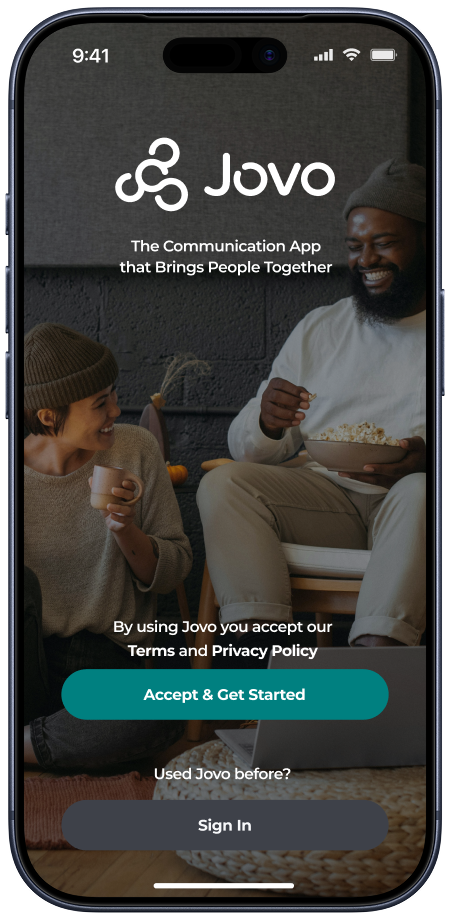
Jovo gives your church one safe place to talk. A dedicated space for every ministry, no personal numbers shared, plus the oversight your safeguarding lead needs when something sensitive comes up.
What WhatsApp Does Well
WhatsApp is easy, familiar and already in everyone's pocket.
Where the purpose is private conversation, its end-to-end encryption is a real security strength. Communities lets you organise separate groups, with an announcement channel that reaches everyone at once. More recently, the new username feature means a newcomer or a parent joining a children's group no longer has to share their mobile number with a room full of strangers.
For a church sharing weekly notices with its adult members, that combination works. The questions start when a church needs more than a noticeboard.
What a Church Still Has to Solve
WhatsApp's recent updates address some concerns, but they do not change what WhatsApp is underneath: a personal messaging app being asked to carry a church's responsibilities. Four gaps matter most for churches:
Usernames hide the number. They don't verify the person.
Hiding phone numbers is a privacy gain, but a username is an identifier, not proof of identity, and every account still sits behind a mobile number. For youth work especially, knowing exactly who is in a group matters as much as protecting how they joined it.
The church still carries the responsibility.
Church membership can indicate religious belief, which is special category data under GDPR. What people share in a chat, for example in a prayer request, can expose health information, family details or other personal information. A paper membership list sits in one place, with one person responsible for it. The same information in a group chat is copied onto every member's phone.
There is no oversight built for safeguarding.
WhatsApp has added helpful personal safety tools, but they are controls each individual switches on for themselves. They do not give a safeguarding lead a way to see what was said, to keep a reliable record when a concern is raised or to set who can join or post. Church safeguarding guidance consistently asks for communication that can be reviewed if there is ever a complaint or allegation.
One-to-one contact stays open.
Church safeguarding guidance also advises that contact with young people should be open, kept to groups with more than one leader and never through private messaging. On WhatsApp, an adult can still message a young person directly. The safeguard depends on everyone following the rule, rather than the tool holding the boundary.
Jovo vs WhatsApp
The difference is clearest in the areas a church has to account for.
| Jovo | ||
|---|---|---|
| Built for | Personal messaging, adapted for groups | Churches |
| Getting started | Already installed, nothing to learn | Familiar to anyone who uses group chat, no training needed |
| Announcements | Announcement channel, admins only | Broadcast announcements to any group or ministry |
| Personal numbers | Hidden with a username, but still required to register | Never required or shared. Name and email only |
| Direct messages | Yes, including adult to under-18 | None. By design |
| Safe for youth work | Guidance advises adults only | Built for it, with leader-only controls |
| Roles and permissions | Admin or member | Role-based, set per group or area |
| Safeguarding record | Individual chat histories only | Safeguarding logs, reviewable by your lead |
| Data ownership | Held by Meta, stored globally, GDPR liability left with the church | Owned by your church, held in the UK, GDPR-compliant by default |
| Group lifecycle | Groups run until someone deletes them | Expiring groups close when the season ends |
| Church systems | No integration | ChurchSuite and Planning Center |
| Cost | Free | From £49 a month for churches, with a 30-day unrestricted free trial |
Comparison last checked against WhatsApp's own published information, September 2026.
What Jovo Does Instead
Jovo is as easy and familiar as WhatsApp but builds in what a church depends on.
A dedicated space for every ministry
Youth, worship, volunteers, small groups, trustees. Send a message to your whole team, a single group or just the youth leaders, all from one place.
No personal numbers shared
People join with a name and an email. Numbers are not hidden behind a username and are never required. A volunteer who helps for a fortnight does not walk away holding the mobile number of everyone else on the team.
No direct messages, by design
There is no route in Jovo for an adult to start a private conversation with a young person. It is not a setting to switch on because it does not exist.
Safeguarding is built in, not bolted on
When a difficult situation comes up over a message, the right people can see it and step in. The record is there for your safeguarding lead when it is needed.
Oversight that matches responsibility
A youth leader runs their group without getting the keys to everything else. Set who can post, who can view and who can join, group by group.
Expiring groups
Holiday club, Alpha course, a team pulled together for one weekend. Set the end date when you create the group and Jovo closes it when you get there, so nothing is left open months later.
It works with what you already use
ChurchSuite and Planning Center integrations keep your groups and people in sync.


