



Some churches already use GroupMe. It's free, and because everyone already knows how to use a group chat, there's nothing to learn. For a single team or a one-off event, that's genuinely useful.
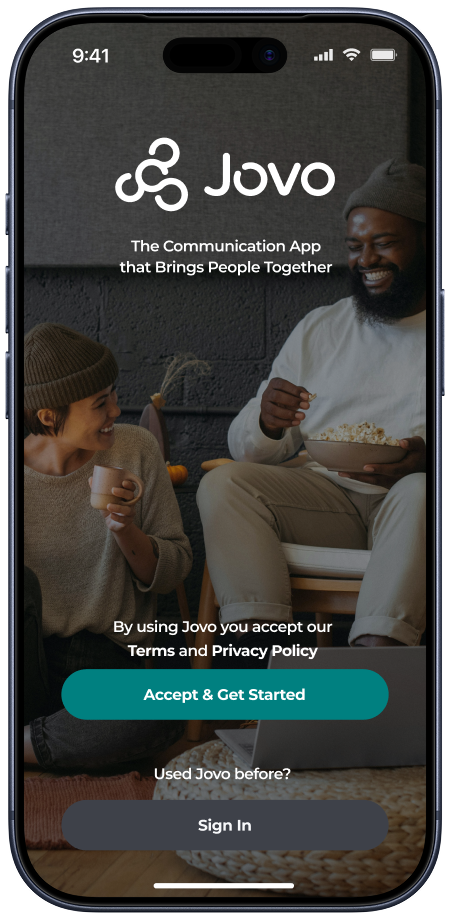
GroupMe was built for one group at a time, whether that's a class, a team or a circle of friends. A church usually needs several groups running at once: youth, worship, volunteers, pastoral care, each with its own people and its own needs. GroupMe has no way to bring them all together, but Jovo was built for churches from the start.
Jovo gives your church one safe place to talk. A dedicated space for every ministry and the oversight your safeguarding lead needs when something sensitive comes up.
What GroupMe Does Well
GroupMe is free, simple, and reaches almost anyone.
There's no subscription or paywall. Every feature is free however many members a group needs. It also works over SMS, so someone without the app can still take part by text message. For an informal or one-off group, that combination is hard to beat.
If a church were to only ever need one group, that might be enough. The questions start when a church needs more than one.
What a Church Still Has to Solve
It's the safeguarding lead who feels this first. Four gaps matter most for churches:
One group at a time, with no admin layer above it.
GroupMe has no dashboard. Every group stands on its own, with its own admins and its own settings. You can lock a group down so only leaders can post, but you have to do it group by group, and there is no view above them. So a church running youth, worship and volunteer groups would run three separate chats with nothing joining them up, and no way for a safeguarding lead to see across them.
One-to-one messaging stays open.
Any member can message any other member privately. Nothing stops an adult messaging a young person directly. The safeguards are reactive: block the sender, or report the message after it has been sent. There is no setting that limits who can start a private conversation.
A phone number is required to join.
GroupMe accounts are tied to a phone number, so every member needs one to take part. Other members can't see it, but nobody can join your church's groups without sharing their number with GroupMe first.
No record for a safeguarding lead to review.
A group owner can delete messages, block members or hand over ownership, but only inside that one group. There is no log, audit trail or activity record for a safeguarding lead to check, in one group or across a church's various groups.
Jovo vs GroupMe
The difference is clearest in the areas a church has to account for.
| GroupMe | Jovo | |
|---|---|---|
| Built for | Informal group chats | Churches |
| Getting started | Free download, familiar to anyone who's used a group chat | Familiar to anyone who uses group chat, no training needed |
| Direct messages | Open between any two members. Block or report after the fact | None. By design |
| Personal numbers | Required to create an account, hidden from other members | Never required. Name and email only |
| Safe for youth work | No restrictions on private contact between members | Built for it, with leader-only controls |
| Church management | Separate groups managed individually | One church with role-based administration |
| Safeguarding record | No dedicated safeguarding or administrative audit record | Reviewable records for the safeguarding lead |
| Church systems | No native integration, only via third-party tools | ChurchSuite and Planning Center |
| Cost | Free | From £49 a month for churches, with a 30-day unrestricted free trial |
Comparison last checked against GroupMe's own published information, September 2026.
What Jovo Does Instead
A dedicated space for every ministry, all in one place
Youth, worship, volunteers, small groups, trustees. However many groups your church runs, they sit under one dashboard your admin team can actually see, instead of separate chats with nothing tying them together.
No direct messages, by design
There is no route in Jovo for an adult to start a private conversation with a young person. It is not a setting to switch on because it does not exist.
No personal numbers shared
People join with a name and an email. A volunteer who helps for a fortnight does not walk away holding the mobile number of everyone else on the team.
Safeguarding is built in, not bolted on
When a difficult situation comes up over a message, the right people can see it and step in. The record is there for your safeguarding lead when it is needed.
Oversight that matches responsibility
A youth leader runs their group without getting the keys to everything else. Set who can post, who can view and who can join, group by group.
Expiring groups
Holiday club, Alpha course, a team pulled together for one weekend. Set the end date when you create the group and Jovo closes it when you get there, so nothing is left open months later.
It works with what you already use
ChurchSuite and Planning Center integrations keep your groups and people in sync.


